

Artificial Intelligence (AI): The Intelligence Revolution
Artificial Intelligence (AI) refers to computer systems designed to perform tasks that typically require human intelligence—such as recognizing patterns, making decisions, understanding language, and learning from experience. Unlike traditional software that follows predefined rules, AI systems can adapt, improve, and make predictions based on data. From voice assistants and recommendation engines to self-driving cars and medical diagnosis tools, AI is transforming how we live, work, and solve complex problems by enabling machines to think, learn, and act with human-like capabilities.
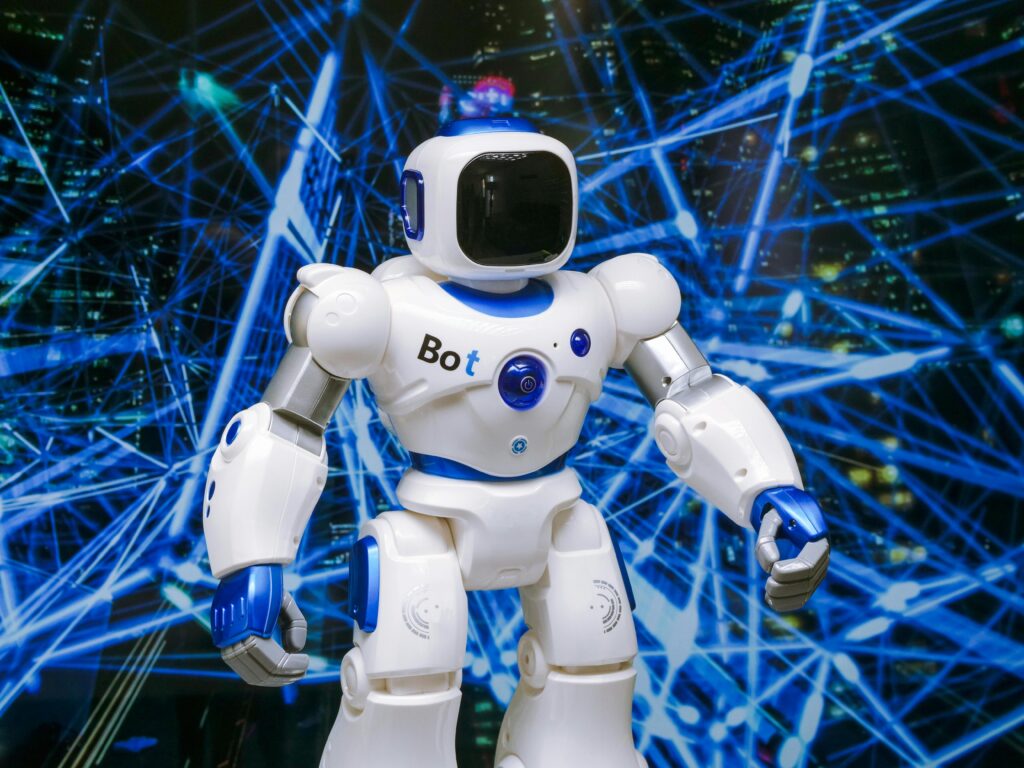
Artificial intelligence techniques, though diverse, all fundamentally rely on data, algorithms, and computational power. AI systems learn and improve through exposure to vast amounts of data, identifying patterns and relationships that humans might miss.
These include:
-
Machine Learning (ML)
-
Deep Learning
-
Natural Language Processing (NLP)
-
Robotics & Autonomous Systems
AI is not a single technology but an entire ecosystem of techniques, tools, data, processes, and people working together to create intelligent systems. From the mathematics that form its foundation to the ethical frameworks that guide its application, every component plays a crucial role in building AI that is effective, responsible, and beneficial to society.
TensorFlow:
TensorFlow is Google’s open-source, end-to-end machine learning platform used by developers and researchers worldwide. It’s a comprehensive ecosystem for building and deploying ML-powered applications, from training complex neural networks on massive datasets to running inference on mobile devices. TensorFlow excels with its production-ready scalability, extensive tooling (TensorBoard for visualization, TFX for pipelines), and support for distributed training across multiple GPUs/TPUs. While it has a steeper learning curve, its robustness makes it the go-to choice for enterprise applications, research projects, and production systems where reliability and scalability are critical.
scikit-learn:
scikit-learn is Python’s fundamental library for traditional machine learning algorithms—simple, efficient, and accessible for data mining and analysis. It provides clean, consistent APIs for everything from data preprocessing (scaling, encoding) to model training (classification, regression, clustering) and evaluation. Unlike deep learning frameworks, scikit-learn focuses on interpretable, tabular data algorithms like decision trees, SVMs, and linear models. Its gentle learning curve, excellent documentation, and practical approach make it the perfect starting point for ML newcomers and the reliable workhorse for data scientists needing quick, effective solutions without neural network complexity.
OpenAI:
OpenAI is an AI research and deployment company pushing the boundaries of artificial intelligence, most famously through its GPT (Generative Pre-trained Transformer) models like ChatGPT. Beyond just API access to conversational AI, OpenAI develops cutting-edge models for code generation (Codex), image creation (DALL-E), and multimodal understanding. Their mission focuses on ensuring artificial general intelligence (AGI) benefits all of humanity, balancing rapid innovation with safety research. For developers and businesses, OpenAI provides access to state-of-the-art AI capabilities through simple APIs, democratizing advanced AI without requiring deep ML expertise or massive computing resources.
Keras
Keras is the high-level neural networks API that makes deep learning accessible and fast to experiment with. Originally an independent library, it’s now TensorFlow’s official high-level API (tf.keras). Keras abstracts away the complexity of frameworks like TensorFlow, allowing developers to build and train neural networks with just a few lines of intuitive code. Its “human-centered design” philosophy emphasizes user experience, fast prototyping, and ease of use while maintaining the flexibility to drop down to lower-level operations when needed. Perfect for education, research prototyping, and production when you want deep learning power without framework complexity.